

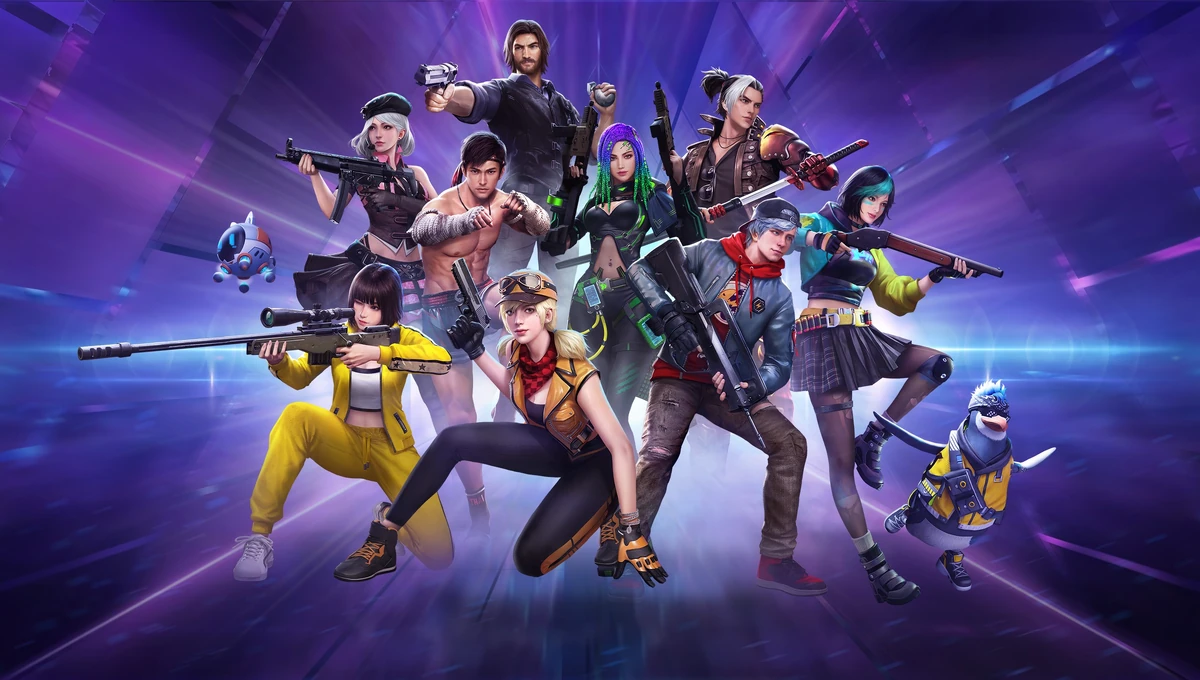
Free Fire Characters are a major part of the game’s combat system because each character can bring a different ability, tactical advantage, or gameplay style to a match. In 2026, the character system continues to evolve with new additions, balance changes, reworked abilities, and expanded customization options. This gives players more ways to build a setup around movement, damage, defense, support, stealth, or team coordination.
Choosing a character is not simply about picking the most popular name. The right choice depends on your weapons, preferred combat distance, game mode, movement style, and ability to use a skill at the right moment. Understanding what each ability does can help both beginners and experienced players create more effective combinations for Battle Royale and Clash Squad.
Table of Contents
- What Are Free Fire Characters?
- How Character Abilities Work
- New and Updated Characters in 2026
- Free Fire Characters by Gameplay Role
- Aggressive Characters and Rush Gameplay
- Defensive and Survival Characters
- Mobility and Stealth Characters
- Support and Team-Based Characters
- Character Skills for Battle Royale
- Character Skills for Clash Squad
- How to Choose the Right Character
- Character Skill Combinations
- Common Mistakes to Avoid
- Tips for Using Character Abilities
- Frequently Asked Questions
- Conclusion
- Keyword Coverage Report
What Are Free Fire Characters?
Free Fire Characters are playable characters with unique skills that can influence different aspects of a match. Depending on the character, an ability may improve movement, increase survivability, provide information, support teammates, create offensive opportunities, or help a player escape from danger.
These abilities make character selection an important part of preparing for a match. Two players using the same weapons can have very different experiences depending on their character skills.
The character system also allows players to create combinations instead of relying on one ability for every situation. This makes the system more flexible and gives players the opportunity to develop setups around their individual playstyles.
For beginners, the large selection can initially seem confusing. However, understanding characters by their practical roles makes the system much easier to learn.
How Character Abilities Work
Character abilities generally fall into two broad categories: active and passive skills.
Active abilities normally require the player to activate them at an appropriate moment. Timing is important because using an ability too early can waste its effect, while waiting too long may cause the player to miss an important opportunity.
Passive abilities usually provide an effect automatically when their conditions are met. These can be easier for beginners because they require less manual timing.
Every ability also has specific conditions, limitations, duration, or cooldown mechanics. Players should understand these details rather than assuming that an ability works continuously.
For example, a stealth ability may improve movement but prevent the player from attacking during its active period. A defensive skill may provide protection for only a limited duration. An offensive ability may require the enemy to meet a particular condition before its full effect occurs.
Understanding these limitations is just as important as understanding the benefits.
New and Updated Free Fire Characters in 2026
The Free Fire character roster continues to change throughout 2026. New characters introduce different mechanics, while existing characters can receive balance adjustments that change their effectiveness.
Ray
Ray is one of the notable newer characters associated with the 2026 character lineup.
His Bond of Eclipse ability focuses on targeting an enemy and creating an opportunity to finish that opponent. The ability marks a suitable target and becomes particularly useful when the enemy’s HP is reduced to the required threshold.
This makes Ray suitable for players who like to focus on one opponent and maintain pressure during an engagement.
Ray’s design is especially interesting for aggressive players because his ability rewards accurate target selection and proper timing rather than random activation.
Kenta
Kenta is another character whose gameplay identity changed significantly after an ability rework.
His updated ability creates a moving tempest that can interact with combat situations around Gloo Walls. Players can also use the ability for repositioning and gain temporary protection through Shield Points.
This gives Kenta a combination of offensive pressure, movement, and defensive utility.
The character can therefore be useful in situations where a player needs to attack while also reducing the risk of receiving heavy damage.
Morse
Morse is designed around stealth and movement.
His Stealth Bytes ability allows him to become harder for distant opponents to detect while receiving increased movement speed and temporary protection. However, the ability comes with an important limitation: the player cannot simply use stealth and continue firing normally.
This creates an interesting trade-off.
Morse can be useful when repositioning, escaping, approaching an area, or attempting a surprise attack. Players need to plan the movement phase carefully because stealth is not the same as unrestricted combat.
Wukong
Wukong remains a recognizable character because of his transformation-based ability.
His ability can be used to create uncertainty during an engagement, change positioning, or prepare an unexpected attack. Balance changes to his cooldown have also affected how frequently players can rely on the skill.
Wukong is therefore particularly interesting for players who enjoy deception, repositioning, and unpredictable movement.
Luna
Luna is associated with attack speed and movement-related gameplay.
Her ability allows players to benefit from increased rate of fire while creating opportunities to improve movement after landing hits. Changes to the effectiveness of her rate-of-fire bonus mean that players need to consider her current version rather than relying on older guides.
She can be particularly interesting for players who prefer aggressive weapon handling and frequent engagements.
Free Fire Characters by Gameplay Role
Instead of trying to memorize every character immediately, players can group Free Fire Characters according to what they help accomplish during a match.
Aggressive characters are designed around initiating fights, applying pressure, or finishing weakened enemies.
Defensive characters help reduce incoming damage or improve survivability.
Mobility characters focus on movement, repositioning, or escaping dangerous situations.
Stealth characters help players approach opponents or change positions without immediately revealing their location.
Support characters provide benefits that can help teammates or improve squad sustainability.
Control-oriented characters can influence enemy movement, Gloo Walls, or important areas of the battlefield.
No single category is automatically suitable for every player. The best role depends on how you approach combat.
Aggressive Characters and Rush Gameplay
Rush players usually enter fights rather than waiting for opponents to make the first move. This playstyle requires quick reactions, movement, and the ability to maintain pressure.
For aggressive gameplay, a useful character ability should ideally help with one or more of these areas:
- Closing the distance
- Surviving incoming damage
- Maintaining pressure
- Finishing weakened enemies
- Escaping after an engagement
- Creating an opening against defensive opponents
Ray is an example of a character whose ability can support target-focused aggression.
However, an aggressive character does not automatically make a player better at rushing. Movement mechanics, crosshair placement, weapon selection, Gloo Wall usage, and decision-making remain important.
Defensive and Survival Characters
Defensive abilities become valuable when a player wants to survive longer engagements or hold an important position.
A defensive character can be useful when fighting from behind cover, protecting teammates, defending a building, or surviving an enemy push.
Kenta’s updated mechanics are relevant here because his ability combines movement with temporary protection. This can give players another option when they need to move through a dangerous area.
Survival-oriented abilities are also useful for players who do not constantly seek fights. Instead of maximizing damage, these players can build their setup around staying alive and taking favorable engagements.
Mobility and Stealth Characters
Movement can determine whether a player escapes a losing fight or reaches an enemy before they can react.
Mobility-focused characters can help with rotations, chasing opponents, crossing dangerous areas, and changing the angle of an engagement.
Morse provides an example of how movement and stealth can work together. His ability can make repositioning safer while increasing movement speed, but the inability to fire during stealth creates a strategic limitation.
The best use of a stealth ability is therefore not simply pressing the button whenever it becomes available. Players should activate it when they have a clear reason to reposition.
For example, stealth can be useful when moving around an enemy squad, escaping after taking damage, approaching another area, or preparing a different attack angle.
Support and Team-Based Characters
Not every player needs to focus entirely on eliminations.
In squad matches, support abilities can become extremely valuable because keeping teammates active can have a direct effect on the team’s ability to continue fighting.
A support-oriented player can focus on healing, recovery, protection, utility, or creating opportunities for teammates.
This creates a more balanced squad because different players can perform different functions.
A squad made entirely of aggressive players may have excellent attacking potential but can struggle when several teammates need recovery or protection. A balanced combination can provide more options during complicated fights.
Character Skills for Battle Royale
Battle Royale provides a large environment where positioning and survival are extremely important.
Players have to manage movement between locations, collect equipment, watch the safe zone, engage opponents, and decide when to fight or avoid combat.
Because of this, character selection should match the overall pace of the player.
A player who frequently rotates across the map may benefit from mobility. Someone who prefers long engagements may value survivability. A player who searches for surprise attacks may prefer stealth or utility.
The changing conditions of a Battle Royale match also mean that an ability that is useful during one phase may be less important during another.
Early in the match, movement and resource management may matter more. During the final zones, defensive positioning, information, and combat timing can become much more important.
Character Skills for Clash Squad
Clash Squad has a different pace because players repeatedly fight in smaller areas and have fewer opportunities to simply avoid combat.
Character abilities can therefore have a noticeable effect on each round.
Players should think about how quickly an ability becomes useful and whether it matches the expected engagement distance.
For example, a close-range player may want a skill that supports aggressive movement, while another player may prefer an ability that provides protection or utility from a safer position.
The limited space also makes timing extremely important.
Using an ability immediately at the beginning of a round may not always be the best decision. Waiting until opponents reveal their position can sometimes provide a better opportunity.
How to Choose the Right Character
Start by identifying your actual playstyle.
If you frequently rush enemies, look for abilities that support close-range pressure and survivability.
If you prefer long-range combat, consider whether the character ability helps you maintain distance, reposition, or survive when enemies approach.
If you play primarily with friends, think about what your squad is missing. If everyone already focuses on damage, a support or defensive role may provide additional value.
Your weapons should also influence the decision.
SMGs and shotguns encourage close engagements, while assault rifles provide greater flexibility across different distances. Snipers and other long-range weapons require positioning and patience.
The character ability should complement that strategy rather than conflict with it.
Character Skill Combinations
Character combinations can create more specialized gameplay setups.
An aggressive combination can focus on movement, damage pressure, and finishing opportunities.
A defensive combination can emphasize protection, recovery, and positional control.
A mobility combination can focus on faster movement and repositioning.
A squad-oriented combination can distribute different responsibilities among teammates.
The important thing is not to copy a combination blindly. A skill combination that works for a professional player or popular content creator may not produce the same results for a casual player.
The best combination is one that you can activate correctly and understand during real matches.
Common Mistakes to Avoid
One of the biggest mistakes is choosing a character simply because it is popular.
Popularity does not necessarily mean an ability fits your playstyle.
Another mistake is ignoring ability limitations. Every skill has conditions, cooldowns, durations, or restrictions that affect how it should be used.
Some players also activate abilities without a clear purpose. This can waste an important skill before a serious fight begins.
Another common mistake is using outdated information. Free Fire receives frequent updates, and character abilities can be adjusted over time.
A character that worked differently several months ago may have different values, cooldowns, or mechanics today.
Players should therefore pay attention to current updates before changing their main setup.
Tips for Using Character Abilities
Learn one ability properly before trying complicated combinations.
Practice the timing of active abilities in different situations. Try to understand what happens when you activate the skill during an attack, retreat, rotation, or defensive position.
Pay attention to cooldowns. If you know when your ability will become available again, you can make better decisions during the next engagement.
Also learn the limitations. Knowing what a character cannot do is often just as useful as knowing what the character can do.
Finally, adjust your setup when your playstyle changes. Your preferred character does not need to remain the same forever.
Frequently Asked Questions
What are Free Fire Characters?
Free Fire Characters are playable characters with unique abilities that can influence combat, movement, defense, recovery, stealth, or team support.
Who is the new Free Fire character in 2026?
Ray is one of the notable new characters associated with the 2026 Free Fire lineup. His ability focuses on marking and finishing a targeted enemy.
Which Free Fire character is best for aggressive players?
Aggressive players should look for abilities that support rushing, target pressure, movement, survivability, or finishing opponents. The suitable choice depends on the player’s preferred strategy.
Are Free Fire character abilities important?
Yes. Character abilities can affect how players approach fights, move around the map, survive attacks, and support teammates.
Can Free Fire Characters be used in Clash Squad?
Yes. Character abilities are relevant in Clash Squad and can influence close-range engagements, positioning, defense, and team coordination.
Can character abilities change after updates?
Yes. Character skills can be balanced, reworked, or otherwise adjusted through game updates.
Is Morse good for stealth gameplay?
Morse is designed around stealth and movement. His ability can help with repositioning, but players must account for its limitations during combat.
What type of character should beginners use?
Beginners should start with a character whose ability is easy to understand and fits their natural playstyle. Simple skills are often easier to learn before moving to more complicated combinations.
Can Free Fire characters improve gameplay?
Character abilities can provide useful tactical advantages, but they cannot replace aiming, movement, positioning, decision-making, and game awareness.
Should I change my character frequently?
There is no need to change characters constantly. It is usually more useful to learn one setup properly and then experiment with alternatives when you understand what your current setup lacks.
Conclusion
Free Fire Characters remain an important part of the game’s strategy in 2026. New characters, reworked skills, balance changes, and additional customization options give players more ways to shape their gameplay around aggression, defense, movement, stealth, support, and team coordination.
The right character is ultimately the one whose ability matches your weapons, preferred game mode, and personal playstyle. Instead of choosing a character only because it is popular, learn how its skill works, understand its limitations, practice the timing, and build your setup around a clear purpose. As Free Fire continues receiving updates, keeping your character knowledge current can help you adapt to new gameplay situations.
